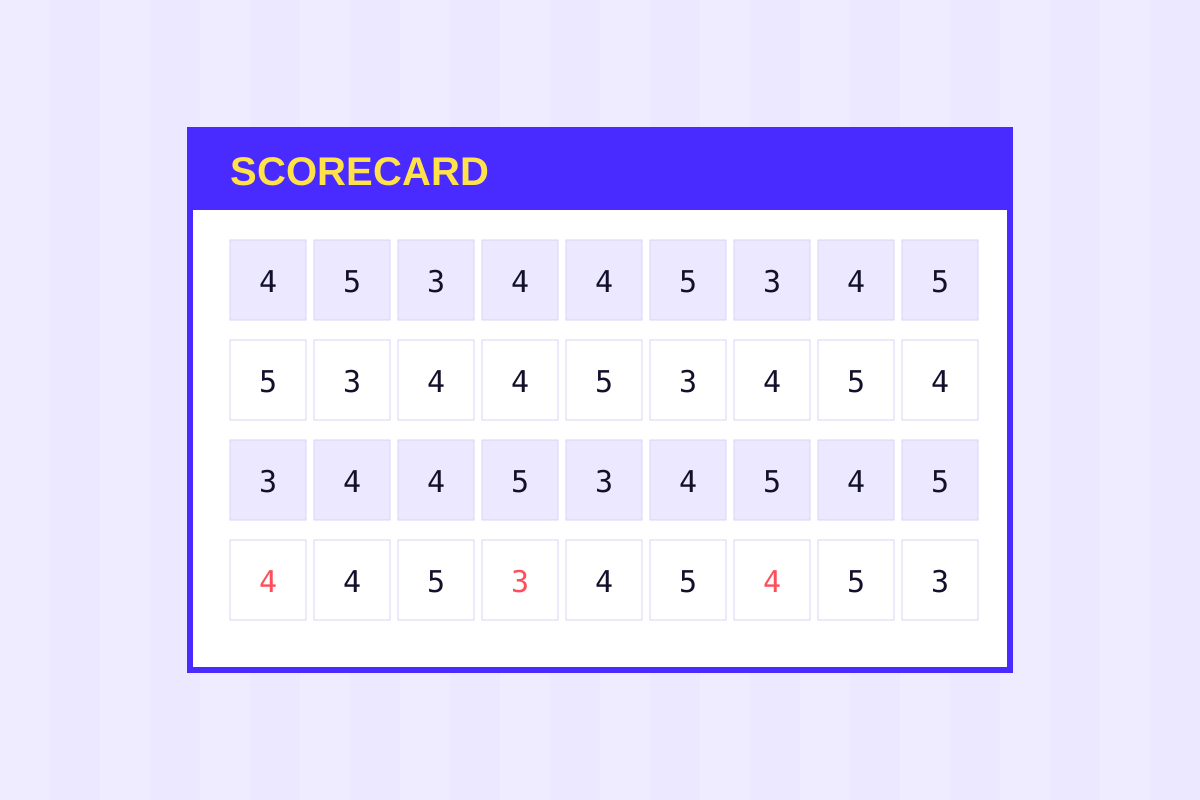
Breaking 90 means shooting 89 or lower. On a par 72 course that is 17 over par, which allows an average of just under one stroke over par per hole plus a few extra. You do not need a perfect swing. You need fewer disasters.
The scoring math
A score of 89 on par 72 is bogey golf on most holes. If you par some holes and make bogey on the rest, with only an occasional double, you are there. Three-putts, lost balls and penalty strokes are what usually push players into the 90s.
Eight strategies
- Play the tee shot you can hit in play: a fairway wood or hybrid is better than a driver in the trees.
- Aim at the middle of the green, not at the flag.
- Know your carry distances for every club so you stop short-siding yourself.
- Practice chipping to one landing spot, not at the hole.
- Two-putt as the goal: focus on distance control, not on holing everything.
- Take penalty drops quickly and avoid risky recovery shots.
- Play from tees that match your distance.
- Track putts and penalty strokes for a month to see the real leaks.
Find your target holes
Mark the holes where you usually make double bogey. Plan those holes differently: pick a safer club off the tee, lay up before water, and accept bogey as a fine result.
Ready to aim higher? Read how to break 80, and check your index with the golf handicap calculator.
Frequently asked questions
What is a good score for a beginner?
Most beginners shoot well above 100. Breaking 100 and then 90 are common first goals.
Is driver or fairway wood better for breaking 90?
Whichever keeps the ball in play more often. Accuracy off the tee usually matters more than distance at this level.
How much does the short game matter?
A lot. Up-and-downs and fewer three-putts remove strokes faster than extra yards.